CAD & CAST COURSE | Lisbon, Portugal

Design in 3D and cast it yourself.

An exclusive 2-week training course for jewellers who want to bring 3D design, AI rendering, 3D printing and casting into their professional workflow.

· Only 4 students per class
· Official GRS certificate
· Hands-on in Lisbon
· Taught by Jonas Fitz

CAD & Cast

Learn the complete process

Exclusive Environment

Maximum of 4 students

Immersive Course

2 weeks of hands-on training

GRS Certificate

A mark of quality

Industry Experience

Learn from Jonas Fitz and Ben Bentvelzen

Not mastering CAD & Cast costs you time, money, and clients.

Goldsmithing vs. CAD & Cast? That’s the Wrong Question.

CAD & Cast does not replace traditional craftsmanship. It removes the work that does not need your hands. Let technology handle the repetitive, time-consuming parts of production so your skill can be focused where it creates real value: precision, finishing and stone setting.
✓
SAVE YOUR BENCH TIME
Build complex geometry, symmetry and even stone-setting layouts digitally. Spend less time preparing the piece and more time doing the work only a skilled jeweller can do.
✓
WASTE LESS. KEEP MORE VALUE.
Produce a piece much closer to its final form, reducing heavy filing, sanding and unnecessary metal loss. Less rework means less waste, faster production and more value staying in your workshop.
✓
PRODUCE WHAT THE MARKET WANTS
The sophisticated forms and precision associated with modern jewellery are no longer exclusive to large manufacturers. Technology that was once out of reach is now accessible to independent workshops.
There will always be a place for jewellery made entirely by hand. CAD & Cast does not compete with that tradition—it expands what you can offer. When you master both, you are no longer limited by the process. You choose the best method for the piece, the client and the result.
THE RIGHT TOOL. IN THE RIGHT HANDS.
The advantage is not choosing between craftsmanship and technology. It is knowing how to combine them. Let the machine do the hard work. Put your skill where it truly matters.

The 4 Steps to Mastery

A beautiful 3D model is only the beginning. Unless it is designed with printing and casting in mind, it can lead to failed prints, wasted materials and costly rework. That is why we teach design, rendering, 3D printing and casting as one connected process—not isolated skills. Learn to anticipate production challenges, present your ideas with confidence and understand what it takes to turn them into real jewellery. Become the professional who brings solutions to the workshop—not problems.

CAD in Rhino
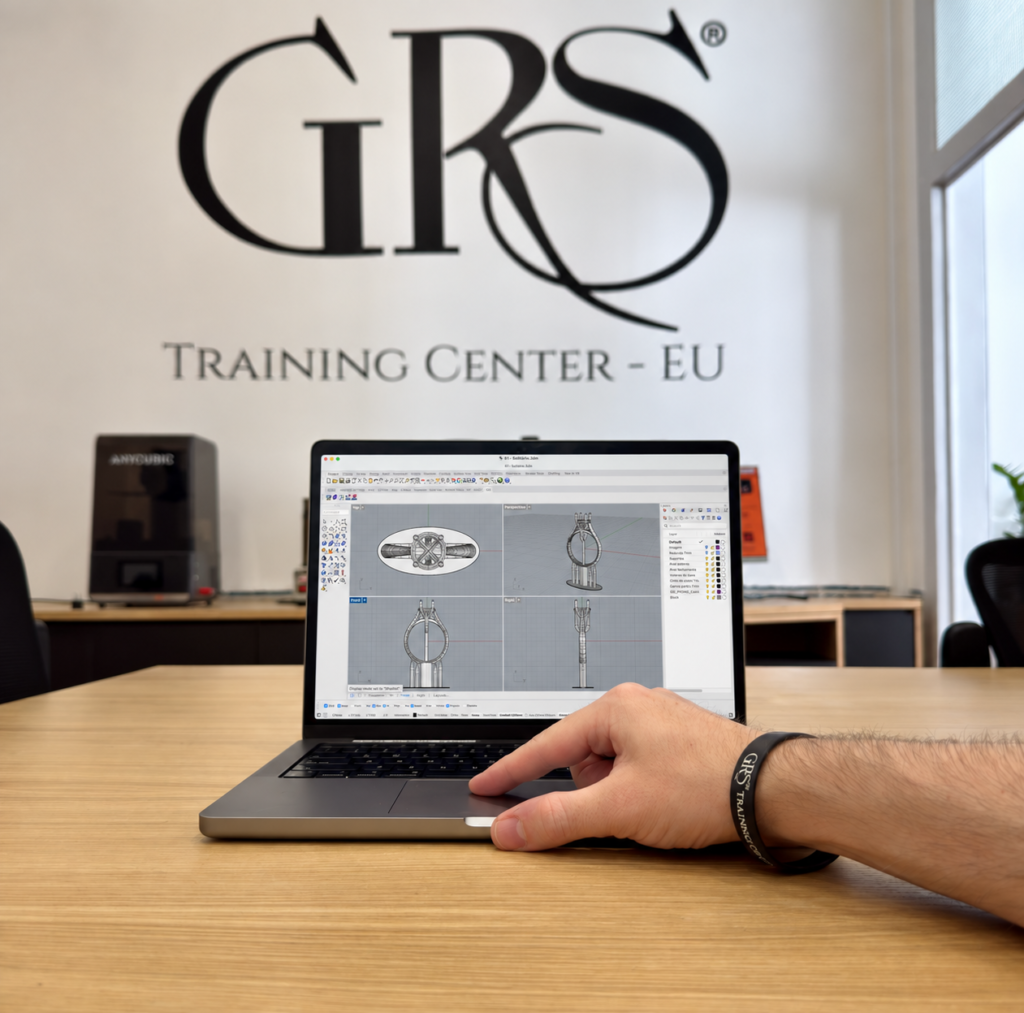
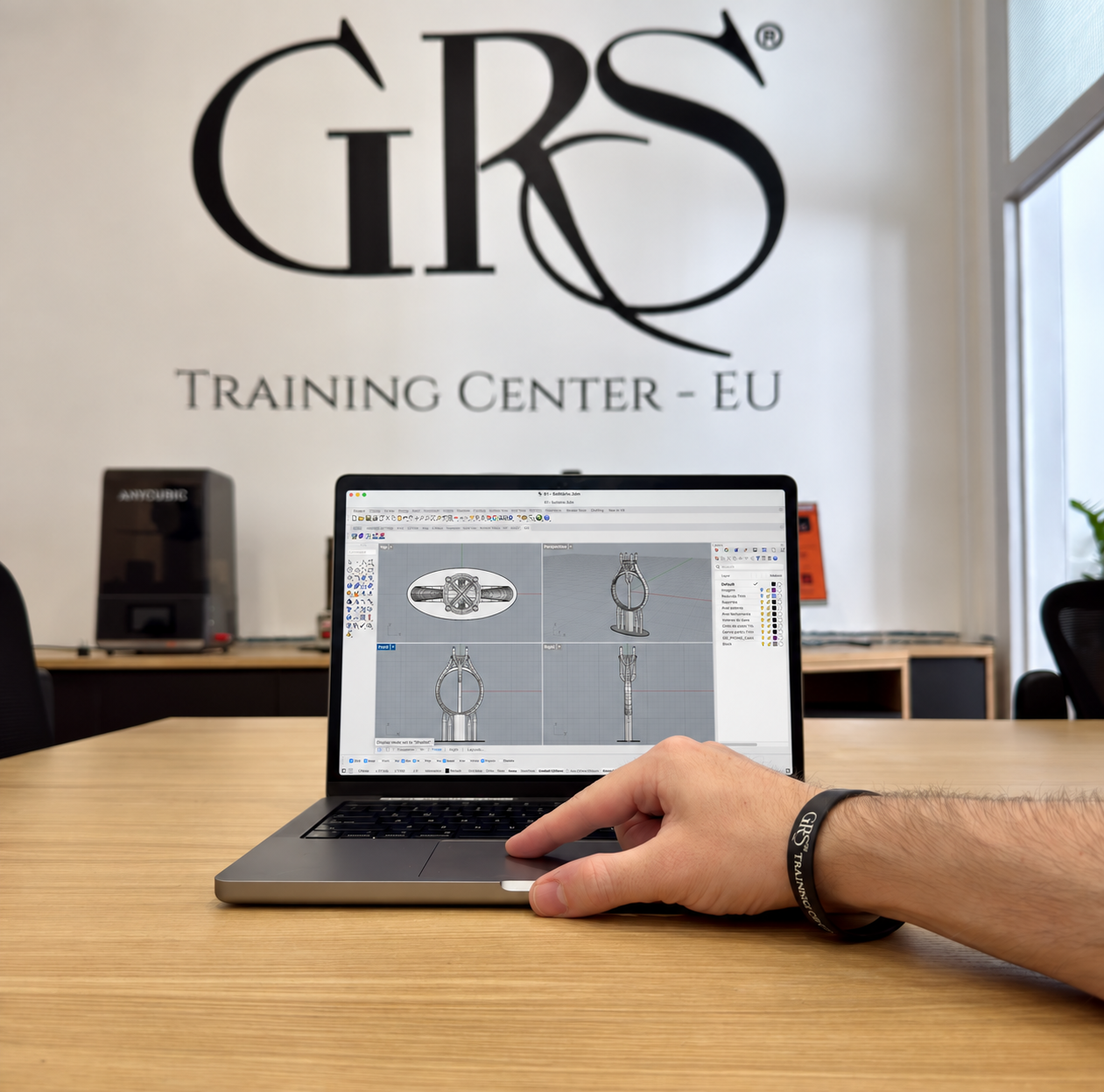
Learn to build jewellery in Rhino with the finished piece in mind. Translate an idea into a digital model, develop its proportions and prepare it for the next stage of production.
IN THE CLASSROOM
✓
Navigate Rhino and build jewellery forms.
✓
Work on the proportions and structure of your designs.
✓
Prepare models for the digital-to-physical process.
FOR YOUR WORK
Develop custom pieces and bring more of the design work into your own hands.

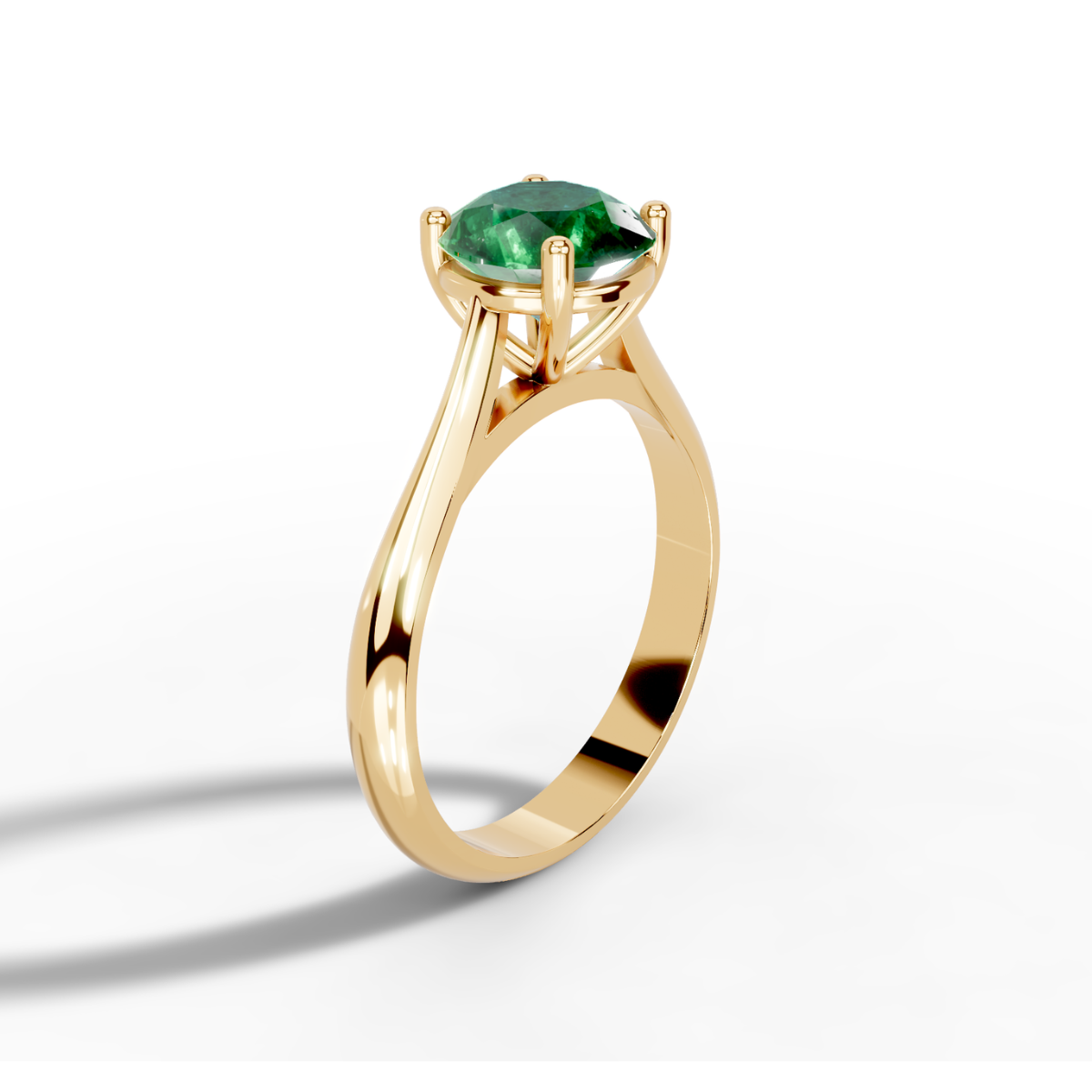
Laptop showing a ring being modelled in Rhino 3D, with a 3D printer in the GRS Training Center classroom behind

AI Rendering

Turn your designs into presentation visuals with AI. Explore the look of a piece and communicate your proposal more clearly before it goes into production.
IN THE CLASSROOM
✓
Create images and videos from your designs.
✓
Integrate interactive and immersive 3D experiences into your website.
✓
Explore different metals and gemstones digitally.
FOR YOUR WORK
Give your customer a clearer picture of the piece you are proposing before you make it.

3D Printing

Learn to set up and operate the most widely used 3D printers and prepare your files correctly. Minimise failed prints and spend less time removing supports—saving materials and hours of unnecessary work.
IN THE CLASSROOM
✓
Set up your printer correctly and avoid failed prints.
✓
Clean and post-cure your prints correctly for more reliable casting results.
✓
Remove print supports with ease.
FOR YOUR WORK
Let your 3D printer do the hard work, so you can apply your skills where they matter most: the finishing touches.

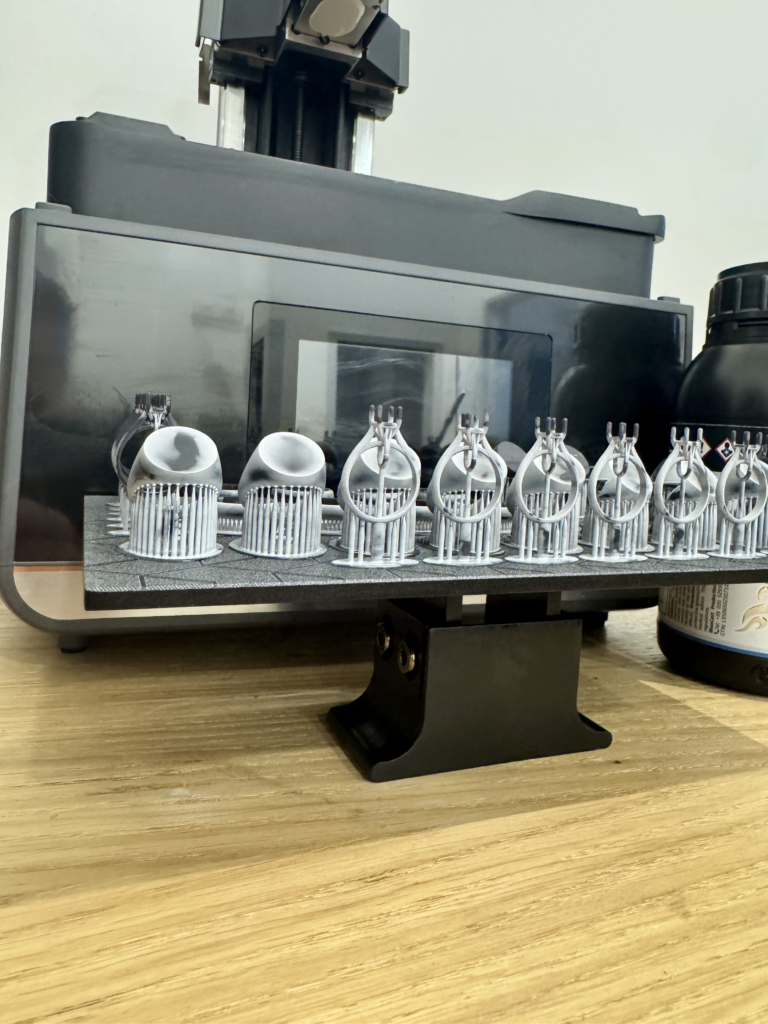
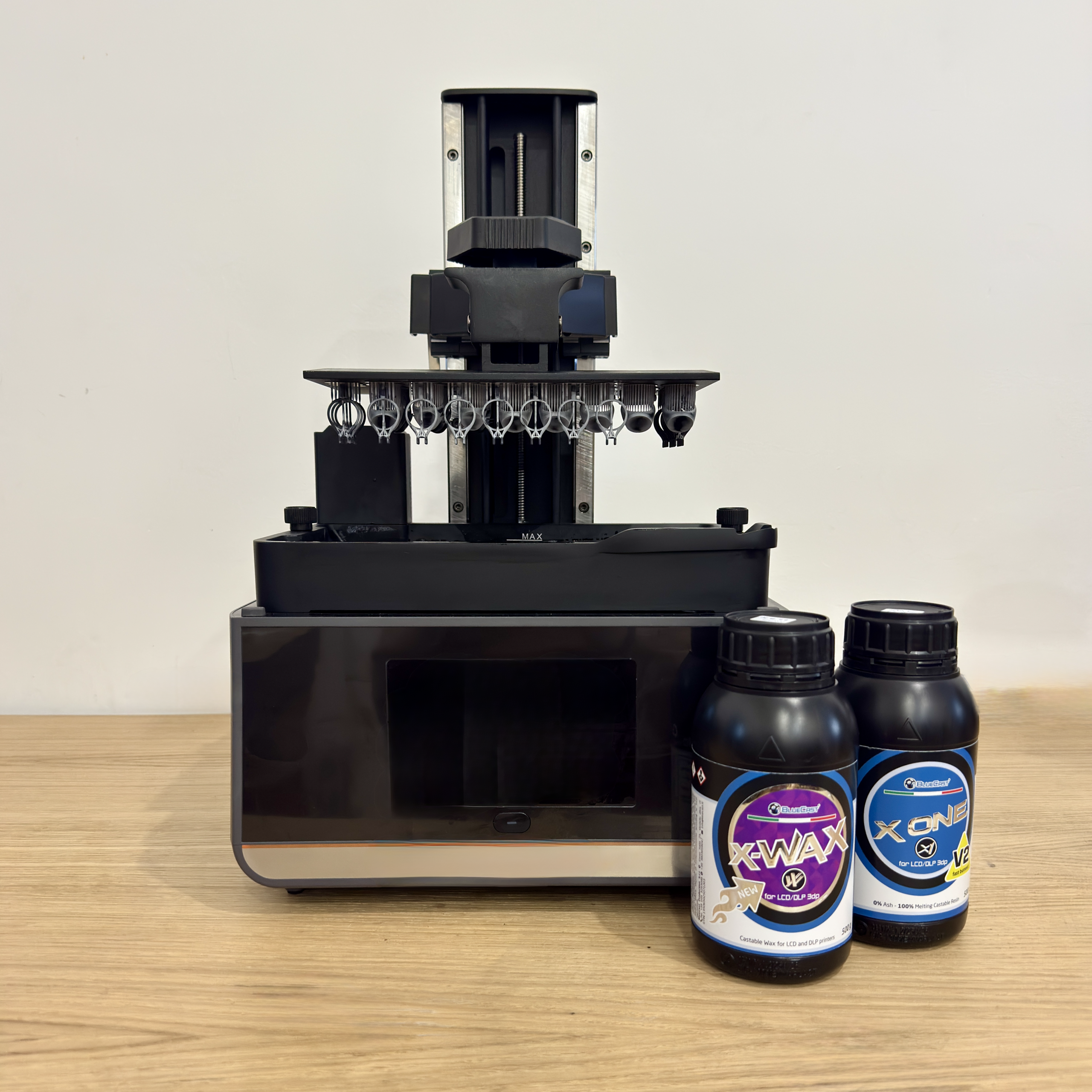
Resin 3D printer build plate with a row of printed ring patterns still on their supports

Casting

Follow the casting process and cast your own jewellery pieces during the course. This is where the digital process becomes something you can hold and take home.
IN THE CLASSROOM
✓
Learn the theory behind the casting process.
✓
Prepare the pieces you designed and printed for casting.
✓
Cast your pieces and see the results.
FOR YOUR WORK
Understand the complete path to metal, rather than depending on separate, disconnected steps.

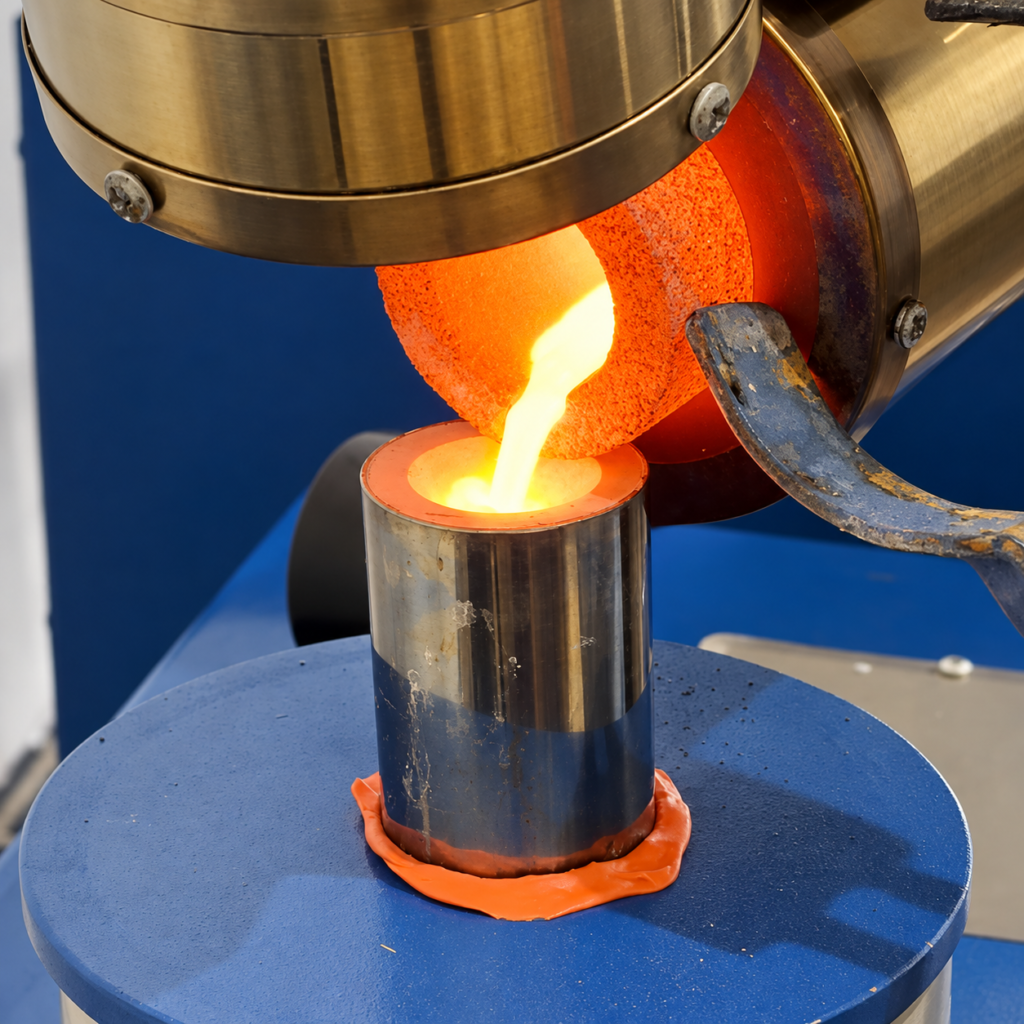
Molten metal poured from a crucible into an investment flask in a jewellery casting machine
FROM SCREEN TO METAL

The Programme

Four modules follow the work in the order it actually happens—from the theory behind each decision to a piece you cast in metal yourself.
The technology is modern; the jewellery stays classic.
4
STUDENTS PER GROUP

Four places, no more—small enough for individual feedback from first model to final casting.

DATES
WHAT YOU WILL LEARN

Theoretical foundations

Casting and 3D printing are not a matter of manual skill but of deep understanding. That understanding is what you will build here.

Rhino and AI rendering

Get to know the Rhinoceros interface, then move straight into practical exercises:
WEDDING BANDS · BOMBÉ RING · SIGNET RING · HINGED EARRINGS · CLUSTER RING · SOLITAIRE RING · CATHEDRAL RING · CENTRE STONE WITH SHOULDER STONES
You learn the software by modelling classic pieces that keep the proportions, character and good taste of traditional jewellery. You also learn to present each design to your client with a photorealistic, professional AI render.

3D printing

How do you get excellent results from a €500 printer? Prepare the file correctly, add supports that come away easily, set up the printer for the castable resin you use, slice with the right anti-aliasing settings, then print, remove the supports, wash and post-cure.

Defect-free casting from resin patterns

Build the tree, prepare the flasks and investment, follow the right burnout schedule, bring the metal to the correct casting temperature and cast it—then learn to identify casting defects and fix what causes them.

Examples from the course

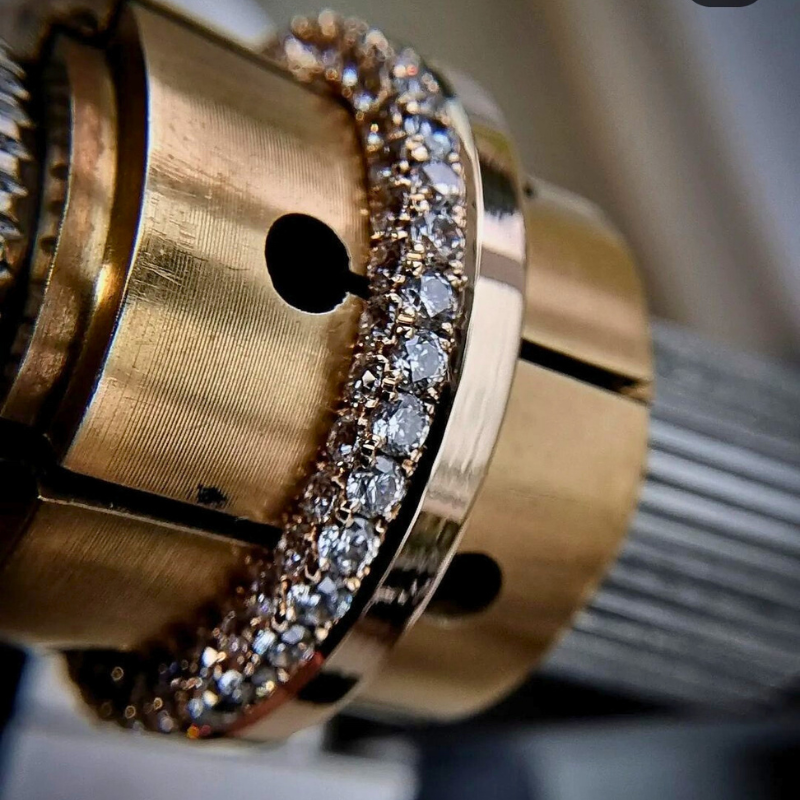
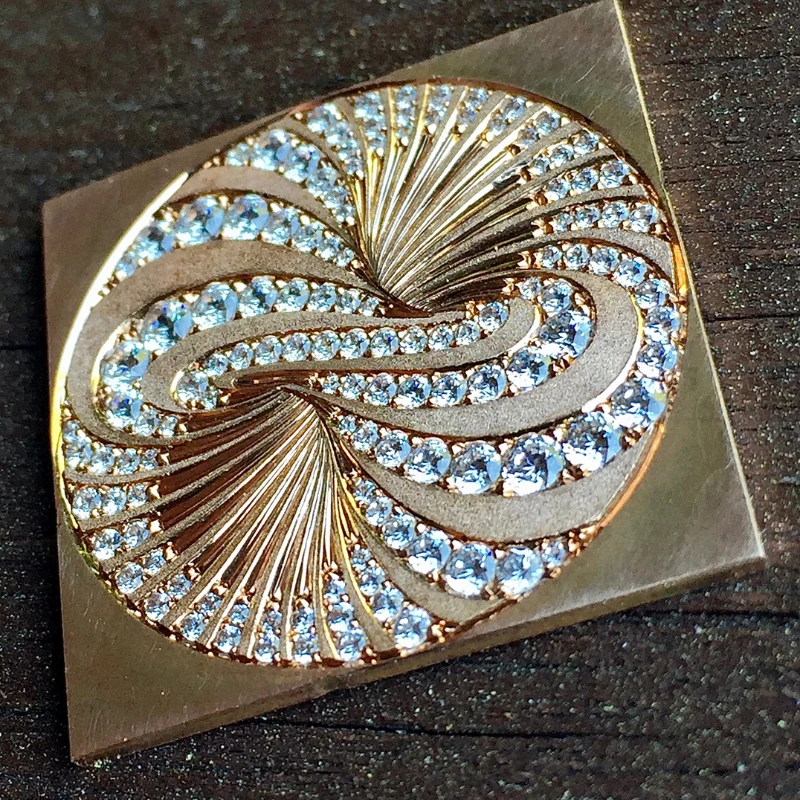
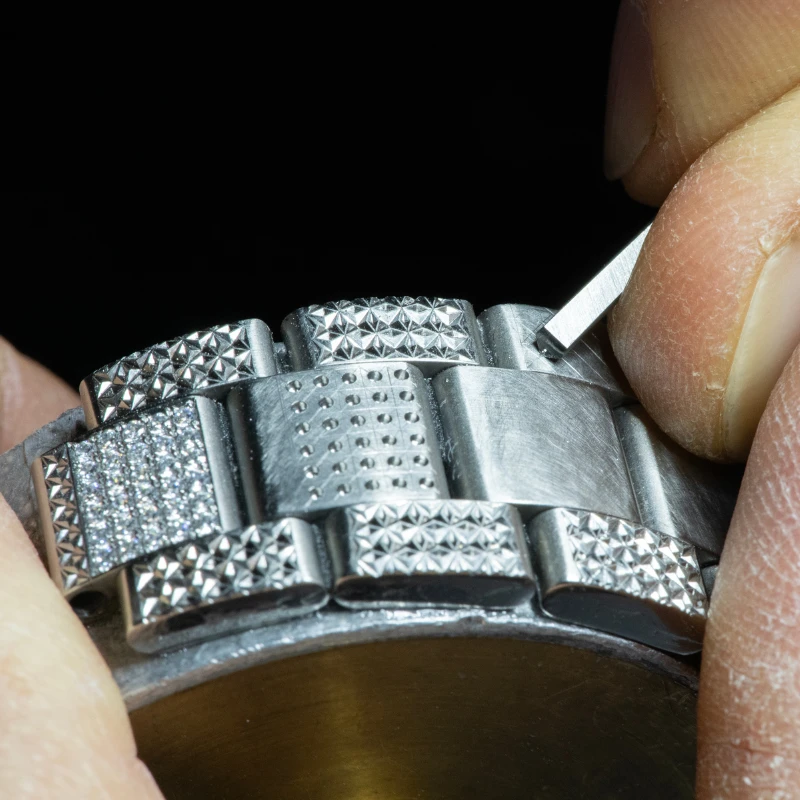
A selection of pieces modelled, printed and cast during the training.
Why GRS Jewellery School?
As Europe’s only official GRS Training Center, we bring together the brand’s international reputation, exceptional instructors and a commitment to the quality of your work.
EXPERTISE YOU LEARN FROM DIRECTLY
Work directly with GRS-certified instructors whose experience spans bespoke jewellery, advanced craftsmanship and industrial production. Learn not just how a technique works, but what makes the difference between an acceptable result and an exceptional one.
SMALL GROUPS. HIGH STANDARDS.
Your progress deserves personal attention. Small groups, individual feedback and hands-on practice give you the guidance to refine your skills—with a focus on results you can take back to your workshop.
INTERNATIONAL RECOGNITION
Build your expertise with a respected name behind you—and earn an official, internationally recognised GRS certificate.

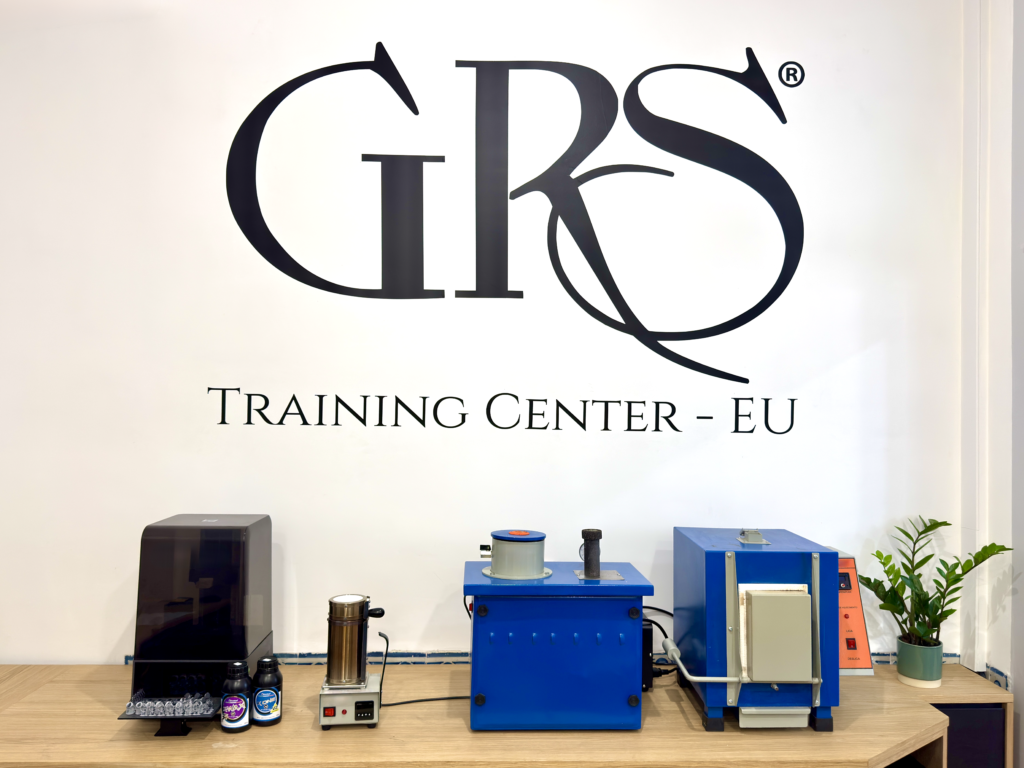
GRS Training Center classroom in Lisbon: 3D printer, burnout furnace and vacuum casting machine below the GRS logo

Frequently Asked Questions

This course is designed for jewellery professionals who want to bring 3D into their workshops through one connected workflow—from design and rendering to 3D printing and casting. You’ll learn to turn your ideas and your clients’ requests into real jewellery, reduce costly production mistakes and make better use of your time—giving you greater creative control and the skills to make your workshop more efficient and profitable.

All you need to bring is your own laptop and a Rhinoceros licence. During the course, we will guide you through the 3D printers, printing resins, casting equipment, investment materials and other supplies required for the process, including recommendations for reliable suppliers.

Not any more. 3D printing and casting equipment has become far more accessible, making it possible for independent jewellers to bring the entire process into their own workshop.

With less than €5,000, you can set up a complete production workflow and still have budget for the essential materials and supplies required for casting. Depending on your margins and production volume, the investment can be recovered through a relatively small number of pieces.

Yes. You will receive a certificate from the only GRS-licensed Training Center in Europe, signed by Jonas Fitz and Ben Bentvelzen.

This certification will give you the credibility you need to bring more authority to your jewellery business or to apply for 3D CAD and casting positions—from small workshops to major international brands.

Yes. You must bring your own laptop with Rhinoceros 7 or later installed so you can follow the practical exercises during the course.

Choose Your Date to Master CAD & Cast and Create Exceptional Jewellery.

CAD & Cast Course

Two weeks of hands-on training in Lisbon to bring 3D design, AI rendering, 3D printing and casting into your professional workflow.

The format
Two weeks, Monday to Friday, in Lisbon
A maximum of 4 students per class
Taught by Jonas Fitz
Official GRS certificate
What you will learn
Theoretical foundations of casting and 3D printing
Rhino modelling and AI rendering
3D printing with castable resin
Defect-free casting from resin patterns
Your own cast pieces to take home
What to bring
Your own laptop with Rhinoceros 7 or later installed
Course fee
€4,997.00*

Excluding VAT. The enrolment form adds VAT only when it applies.

How to pay
Pay in full: €4,997.00
Or reserve with a 30% deposit (€1,499.10) and pay the remaining 70% (€3,497.90) by the course start date
Available dates

*Individuals and companies located outside the European Union do not need to pay Portuguese VAT.

Companies within the European Union that have a valid VAT number can also purchase without Portuguese VAT, as the transaction is processed under the EU reverse-charge system.

Individuals within the European Union, as well as companies that do not have a valid VAT number, are required to pay Portuguese VAT (23%). Portuguese individuals and companies must always pay 23% VAT, according to Portuguese tax regulations.

The development of the curriculum depends on the group’s learning speed and application.
The students must bring their own laptops with Rhinoceros installed.